Source customized religious aluminum miraculous medal for Prayer, Easter, and Souvenirs
Explore 30 listings for customized religious aluminum miraculous medal options featuring die stamping and casting techniques. Buyers can compare specifications like plating, size, and MOQ to find suitable suppliers for prayer, Easter, and souvenir applications.
Key considerations
Products List
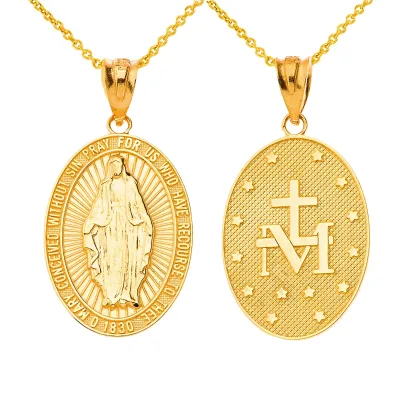

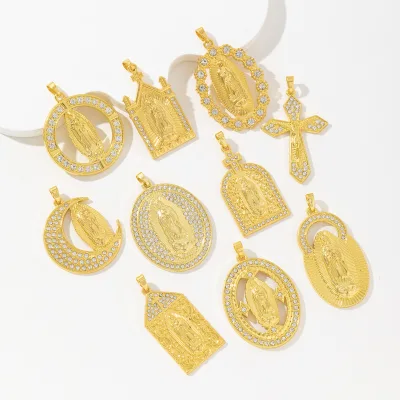
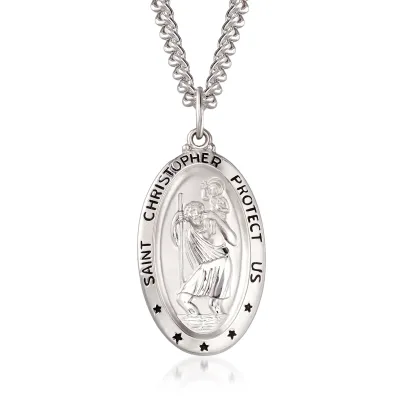


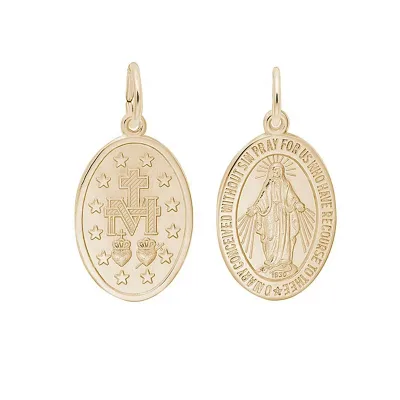
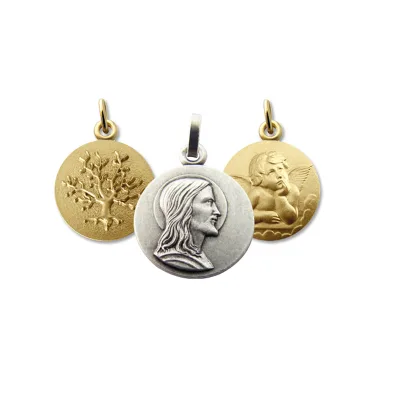


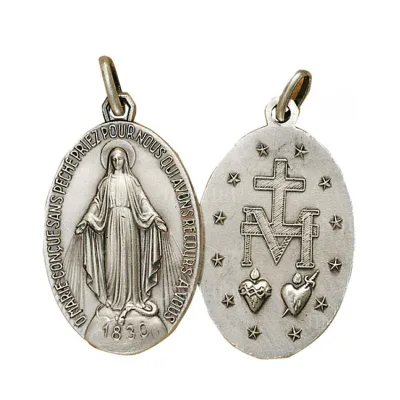
Comprehensive Sourcing Guide
Strategic Sourcing Guide for Customized Religious Aluminum Miraculous Medals
Understanding Product Specifications and Material Variability
When sourcing customized religious aluminum miraculous medals, buyers must first navigate the complex landscape of material definitions and technical specifications found in current market listings. While the core keyword specifies "aluminum," the available product data reveals a significant divergence in material claims. Some listings explicitly identify the material as "Alloy" or "Metal," while others specify "Aluminum" in the context of die-stamping processes. This discrepancy requires immediate verification during the supplier engagement phase. The observed production techniques include die stamping, casting, hard enamel, soft enamel, and gilding. These processes dictate the final tactile and visual quality of the medal. For instance, the "Die Stamping" process is often associated with the "Double Sides 3D Logo" feature, which is critical for the intricate iconography required by Miraculous Medal designs. Conversely, "Casting" techniques are noted for achieving specific thicknesses, with observed ranges extending from 2mm to 7mm, allowing for a customised thickness that can enhance the perceived value of the religious artifact.
The dimensional specifications are equally variable. Buyers will encounter products described as "One Size" alongside those offering "Customized" sizes. The standard size range observed in the market includes diameters of 0.5'', 1'', 1.25'', 1.5'', 1.75'', and 2'', with provisions for any custom dimension. This flexibility is essential for tailoring medals to specific religious orders or commemorative events. The physical packaging dimensions also vary, with single package sizes ranging from 8x5x1 cm to 9.2x9.5x0.8 cm, indicating that the inclusion of accessories like lanyards or ribbons significantly impacts the final package profile. Furthermore, the weight of individual units is a critical logistical factor, with observed single gross weights ranging from 0.100 kg to 0.200 kg. This variance suggests that the density of the alloy or the thickness of the metal directly influences shipping costs, necessitating precise weight confirmation before finalizing order quantities.
Compliance, Certification, and Religious Standards
In the realm of religious artifacts, compliance extends beyond standard industrial safety to include adherence to specific religious iconography and ethical sourcing standards. The product listings indicate that the "Theme" is "Love" and the "Application" covers "Souvenir, PRAYER, Easter," which implies a need for strict adherence to the visual representation of the Miraculous Medal. The "Name" is explicitly listed as "Miraculous Medal," and the "Usage" includes "Collection, Ceremonies, Holiday Gifts, Business Gift, Wedding, Tour, Sport." This broad application spectrum means that the design must be versatile enough to meet both sacred and secular expectations without compromising religious integrity.
Buyers must verify that suppliers possess the capability to reproduce the specific iconography accurately, as the "Logo" is described as "Custom as Your Own Logo." This customization capability is often paired with "Custom Plating" options, which include Gold, Silver, Nickel, Copper, Black Nickel, Chrome, and Antiqu finishes. The "Other Plating" list suggests a wide array of aesthetic choices, but the buyer must ensure that the chosen plating does not contain prohibited substances, particularly if the product is intended for export to regions with strict environmental regulations. While the provided data does not list specific certifications like RoHS or REACH, the presence of "Trade Assurance" and "T/T" payment methods suggests a level of transactional security. However, buyers should not assume certification status based on payment terms alone. It is imperative to request specific test reports regarding the metal composition and plating safety, especially since the "Regional Feature" notes suitability for "Us, Europe," regions with rigorous import standards for metal goods.
Cost Drivers and Pricing Dynamics
The pricing structure for customized religious medals is influenced by several distinct factors, primarily driven by the complexity of the design, the material thickness, and the finishing processes. The observed listed price range in the market spans from 0.15 USD to 2.55 USD per unit. This wide variance is not merely a function of volume but is heavily correlated with the "Process and Feature" complexity. A simple die-stamped medal with a single-sided logo will likely fall at the lower end of this spectrum, whereas a casting-based medal featuring "Double Sides 3D Logo," hard enamel, and a custom antiqu finish will command a price closer to the upper limit.
Material costs are a primary driver, yet the data presents a contradiction between "Aluminum" in the keyword and "Alloy" or "Metal" in the specifications. If the final product is indeed aluminum, the cost will be lower than if it is a heavier zinc or brass alloy, which is common for high-quality religious medals. The "Thickness" specification, ranging from 2mm to 7mm, is another critical cost variable. Thicker medals require more raw material and longer production times, directly increasing the unit cost. Additionally, the "Plating" process adds significant value; gold plating, for instance, is more expensive than nickel or copper plating. The "Production Time" of 16-23 days also impacts cost, as longer lead times often correlate with more intricate manual finishing steps or smaller batch efficiencies. Buyers should be aware that the "MOQ" (Minimum Order Quantity) varies between 10, 50, and 100 pieces depending on the design complexity. Lower MOQs, such as 10 pieces, may carry a premium per unit, while orders exceeding 100 pieces might benefit from economies of scale, though the data does not provide specific tiered pricing models.
Typical Applications and Market Segmentation
The versatility of the customized religious medal allows it to serve multiple market segments, from strictly liturgical use to broader commercial applications. The "Application" field lists "Souvenir, PRAYER, Easter," indicating a strong primary market in religious institutions and pilgrimage sites. The "Theme" of "Love" and the specific "Name" of "Miraculous Medal" suggest a niche market focused on Catholic and Christian communities. However, the "Usage" category expands this reach significantly, including "Collection, Ceremonies, Holiday Gifts, Business Gift, Wedding, Tour, Sport." This indicates that these medals are increasingly being used as corporate gifts or promotional items for religious tourism, where the "Custom Designs" feature allows companies to brand the medal with their logo alongside the religious imagery.
The "Accessory" options, such as "lanyard/ribbon," further broaden the application scope. A medal with a ribbon is suitable for wearing as a necklace during religious ceremonies, while a medal with a custom box or velvet case is appropriate for high-end business gifts or wedding favors. The "Package" options, ranging from simple "Poly Bag" to "Plastic/Acrylic Case" or "Velvet/Wood Box," allow buyers to target different price points and customer expectations. For example, a simple poly bag is suitable for bulk distribution at a church event, whereas a velvet box is necessary for a premium souvenir shop in a major pilgrimage destination. The "Regional Feature" noting suitability for "Us, Europe" suggests that the design aesthetics and packaging standards must align with Western preferences for quality and presentation.
Supplier Evaluation and Operational Capabilities
Evaluating a supplier for this specific product category requires a deep dive into their operational capabilities and geographical footprint. The data indicates that suppliers are located in "Fujian, China" and "Guangdong, China," two major manufacturing hubs known for metalworking and jewelry production. While the "Brand Name" "Xifanen" appears in the listings, buyers should not rely on a single brand name as a proxy for quality. Instead, the focus should be on the supplier's ability to handle "Custom Designs" and "Custom Plating." The "Process" capabilities listed, including "Hard Enamel, Soft Enamel, Gilter, Glow in Dark etc," demonstrate a diverse technical skill set. A supplier capable of "Glow in Dark" effects may not be the best choice for a traditional religious medal, highlighting the need to match the supplier's specific process strengths to the buyer's design requirements.
The "Payment" terms of "T/T or Trade Assurance" are standard, but the "Production Time" of 16-23 days is a critical metric for supply chain planning. Buyers must verify if this timeline includes the time for sample approval, as "Custom Designs" often require a proofing stage before mass production begins. The "MOQ" of 50 pieces or 100 pieces per design is a significant constraint for small-scale buyers. Suppliers with a lower MOQ of 10 pieces might be more flexible but could lack the capacity for large-scale orders. The "Single Gross Weight" of 0.100kg to 0.200kg also affects the supplier's logistics capabilities; a supplier with a high volume of heavy orders may have better shipping rates, but the buyer must ensure the packaging is robust enough to prevent damage during transit. The "prod_packing" details, such as "1PC/OPP, 100PCS/Big Poly Bag," suggest a standardized approach, but "Custom Packing Welcomed" indicates that the supplier is open to bespoke packaging solutions, which is a positive indicator for buyers with specific branding needs.
Quality Control and Long-Term Procurement Considerations
Ensuring consistent quality in religious medals is paramount, as these items often hold significant sentimental and spiritual value for the end-user. The "Process" of "Die Stamping" and "Casting" must be executed with precision to ensure that the "Double Sides 3D Logo" is clear and the "Thickness" is uniform. Buyers should implement a rigorous quality control protocol that includes visual inspection of the "Plating" for consistency and color accuracy. The "Other Plating" options, such as "Antiqu" and "Blacknickel," require specific attention to ensure that the finish is even and does not peel or tarnish prematurely. The "Single Package Size" and "Single Gross Weight" should be verified against the supplier's specifications to ensure that the product arrives in good condition and that the shipping costs are accurately calculated.
For long-term procurement, buyers should consider the scalability of the supplier's production line. The "Production Time" of 16-23 days is acceptable for standard orders, but for large-scale projects, the supplier must demonstrate the ability to maintain this timeline without compromising quality. The "Customization" availability is a key factor for long-term partnerships, as it allows for the adaptation of designs to changing religious trends or corporate branding needs. The "Shape" being "Customized" and "Round" suggests that the supplier can accommodate various design requests, but buyers should verify the feasibility of complex shapes before committing to large orders. Finally, the "Application" of the medal in "Ceremonies" and "Holiday Gifts" implies a seasonal demand pattern. Buyers should plan their orders well in advance of peak seasons to avoid delays, ensuring that the "Production Time" is factored into the overall project timeline. By maintaining a focus on technical specifications, compliance, and supplier capabilities, buyers can secure a reliable supply chain for customized religious aluminum miraculous medals that meets both aesthetic and functional requirements.
FAQs
What materials are used for customized religious aluminum miraculous medals?
Products are typically made from alloy or metal rather than pure aluminum. Buyers must verify the specific material composition as listings vary between alloy and metal definitions.
Can I order customized designs for these religious medals?
Yes, custom designs and logos are available for these medals. Suppliers offer customization for shapes, plating, and iconography to meet specific religious or branding requirements.
What is the minimum order quantity for these medals?
The minimum order quantity ranges from 10 to 100 pieces depending on the design complexity. Some listings specify 50 pieces or 100 pieces per design as the standard threshold.
How long does production take for these customized medals?
Production time typically takes between 16 and 23 days. This duration covers the manufacturing process including die stamping, casting, and custom plating finishes.
Which plating options are available for these medals?
Available plating options include gold, silver, nickel, copper, black nickel, chrome, and antiqu finishes. Custom plating is supported to match specific aesthetic or religious standards.
What sizes are available for these religious medals?
Standard sizes range from 0.5 inches to 2 inches with provisions for any custom dimension. Buyers can also find products described as one size or fully customized sizes.